











What Is Engine Blow-By? Diagnose Worn Rings & Cylinders
What Is Engine Blow-By? How to Diagnose Worn Rings and Cylinders
If you’ve noticed oil consumption climbing, a hissing sound from the oil fill cap, or a loss of power on your ATV, UTV, or PWC, blow-by is one of the first things worth ruling out. Here’s what it is, why it happens, and how to check for it before you tear into a rebuild.
What Is Blow-By?
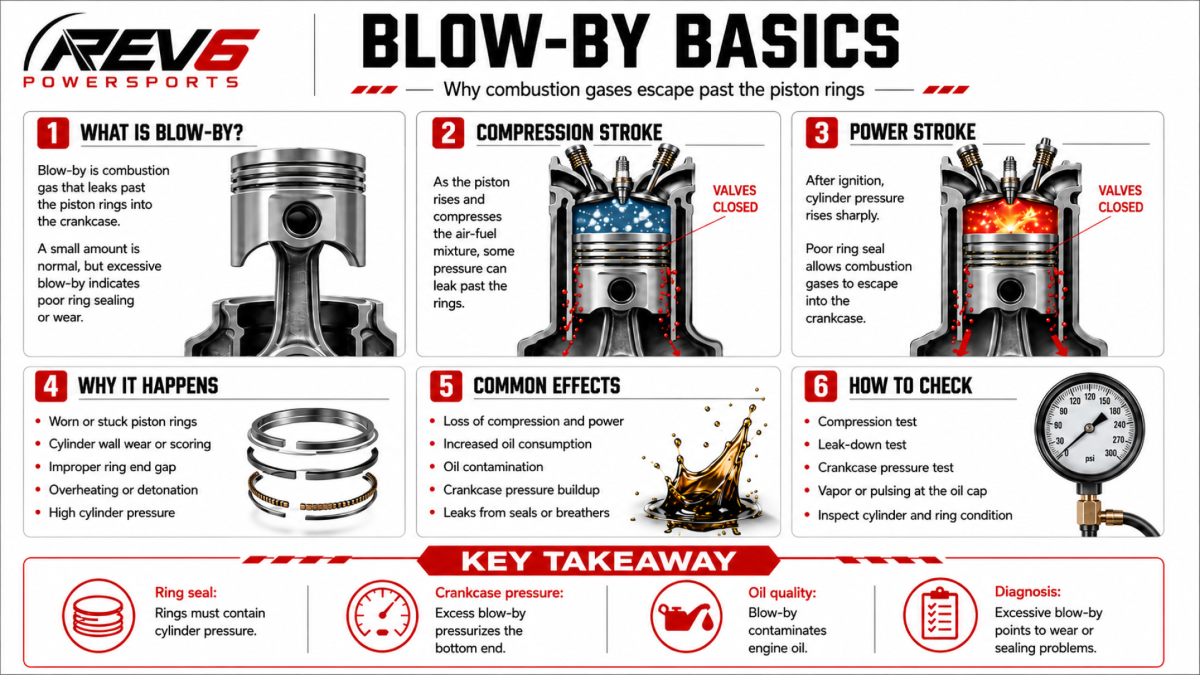
Blow-by is combustion gas that leaks past the piston rings into the crankcase instead of staying above the piston where it belongs. A small amount is normal in any running engine. Excessive blow-by means your rings, cylinder wall, or piston aren’t sealing the way they should.
How It Happens
During the compression stroke, the piston rises and compresses the air-fuel mixture with both valves closed. If the rings aren’t sealing properly, some of that pressure escapes past them into the crankcase before combustion even happens.
During the power stroke, cylinder pressure spikes hard right after ignition. This is where poor ring seal shows up the most — high-pressure combustion gas finds any gap in the ring seal and pushes straight through into the crankcase.
A few things cause excessive blow-by:
- Worn or stuck piston rings
- Cylinder wall wear or scoring
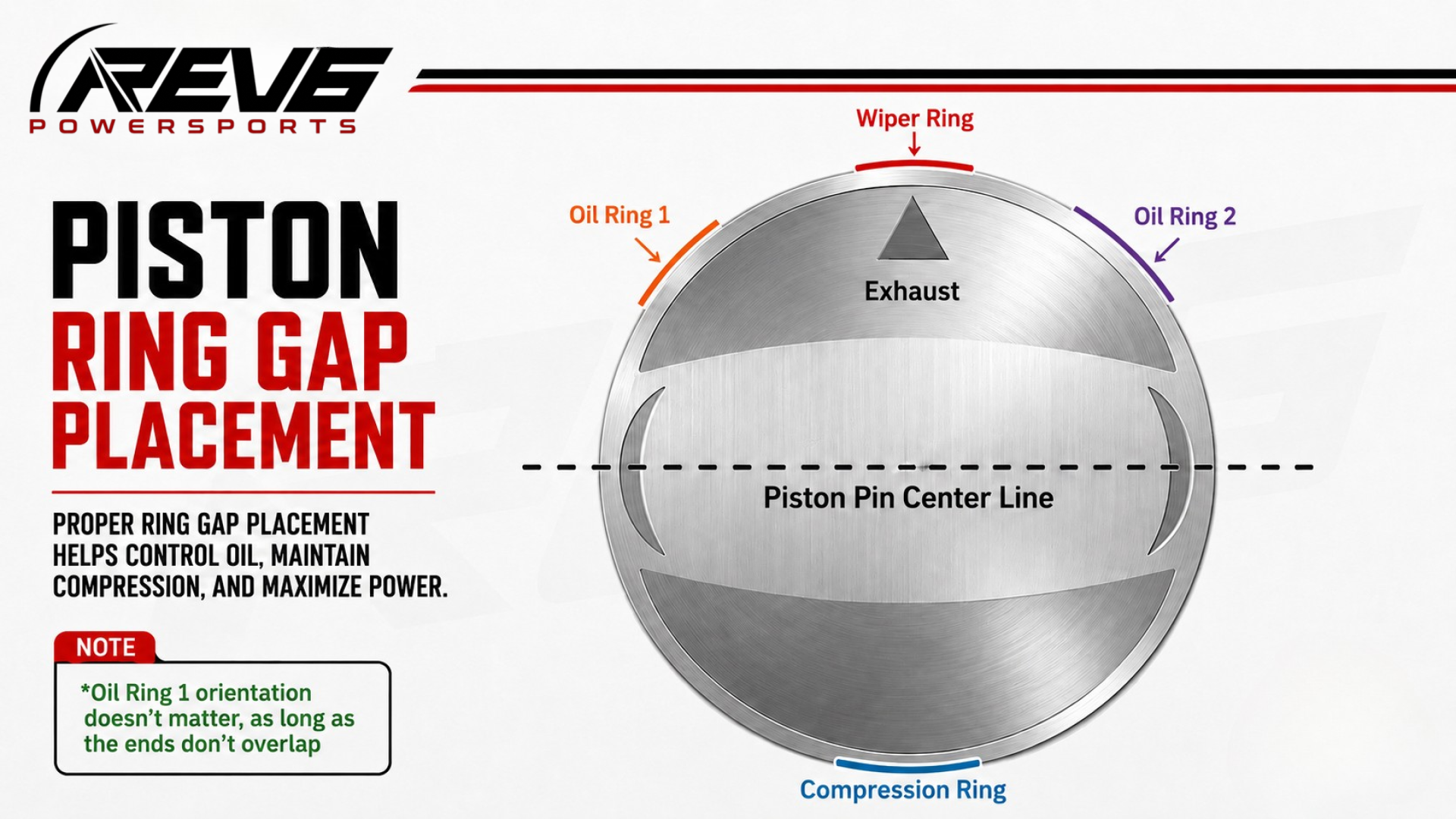
- Improper ring end gap during install
- Overheating or detonation damage
- Sustained high cylinder pressure (boost, poor tuning, etc.)
What Excessive Blow-By Actually Costs You
- Loss of compression and power
- Increased oil consumption
- Oil contamination from combustion byproducts
- Crankcase pressure buildup
- Leaks from seals or breather hoses that weren’t leaking before
How to Check for Blow-By
You don’t need to guess. Here’s how shops and experienced DIYers confirm it:
- Compression test — a quick first check for how well the cylinder is sealing overall.
- Leak-down test — more precise than a compression test; tells you exactly where pressure is escaping (rings, valves, or head gasket).
- Crankcase pressure test — measures how much pressure is building up where it shouldn’t be.
- Vapor or pulsing at the oil cap — pull the oil fill cap with the engine idling. Noticeable pulsing or vapor is a strong blow-by indicator.
- Inspect cylinder and ring condition — if you’re already into the top end, a visual inspection tells you a lot.
What a Removed Piston Tells You
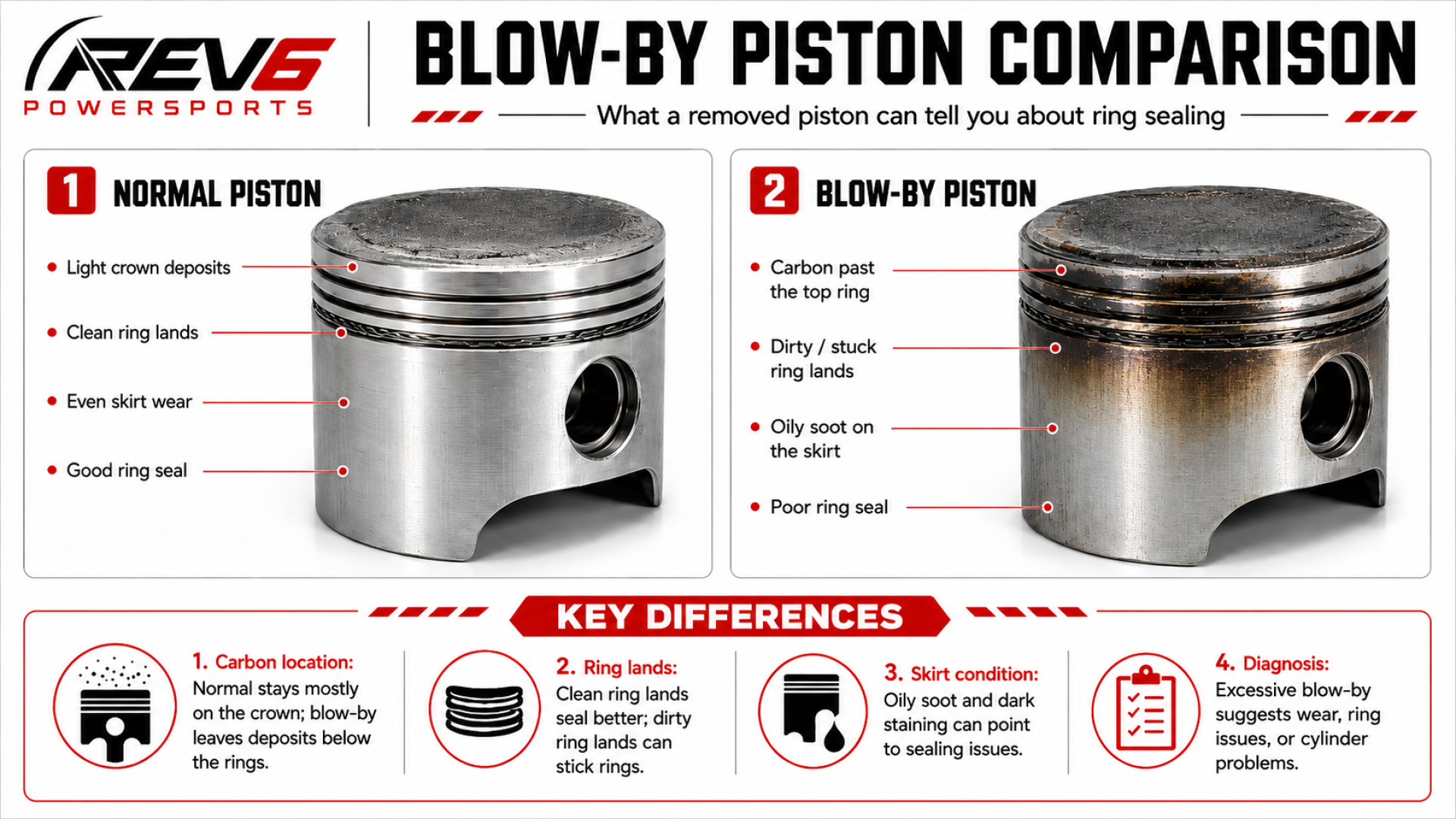
If you’re already pulling the top end apart, the piston itself will tell you what’s been going on inside the cylinder.
A normal piston shows light crown deposits, clean ring lands, even skirt wear, and a good overall ring seal.
A blow-by piston tells a different story — carbon deposits pushed past the top ring, dirty or stuck ring lands, oily soot on the skirt, and visible signs of poor ring seal.
Ring Land Condition Matters
Clean ring lands seal better. Dirty or carbon-stuck ring lands are often the reason rings stop sealing in the first place — carbon buildup keeps the ring from moving freely and seating against the cylinder wall the way it needs to.
FAQ
Blow-by is combustion gas escaping past the piston rings into the crankcase instead of staying in the combustion chamber. Some blow-by is normal; excessive blow-by signals worn rings or cylinder wall damage.
Signs include rising oil consumption, hissing or pulsing at the oil fill cap while idling, loss of power, and failed compression or leak-down tests.
It depends on the cause. Stuck rings from carbon buildup can sometimes be addressed with a decarbonization service, but worn rings or a scored cylinder wall require a top-end rebuild or replacement.
Yes. All running engines have a small amount of blow-by, which is why crankcase breather systems exist. It only becomes a problem when it’s excessive.
Bottom Line
A small amount of blow-by is normal wear and tear. Excessive blow-by is a sign your rings or cylinder need attention before a minor oil consumption issue turns into a full engine failure. If your compression or leak-down numbers are outside spec, or your piston looks like the blow-by example above, it’s time to look at a rebuild kit or complete remanufactured engine rather than throwing more oil at the problem.
Not all replacement pistons are built the same — see what sets REV6 pistons apart, from moly-coated skirts to RIK rings. Browse REV6 piston rebuild kits and complete remanufactured engines for your make and model.